
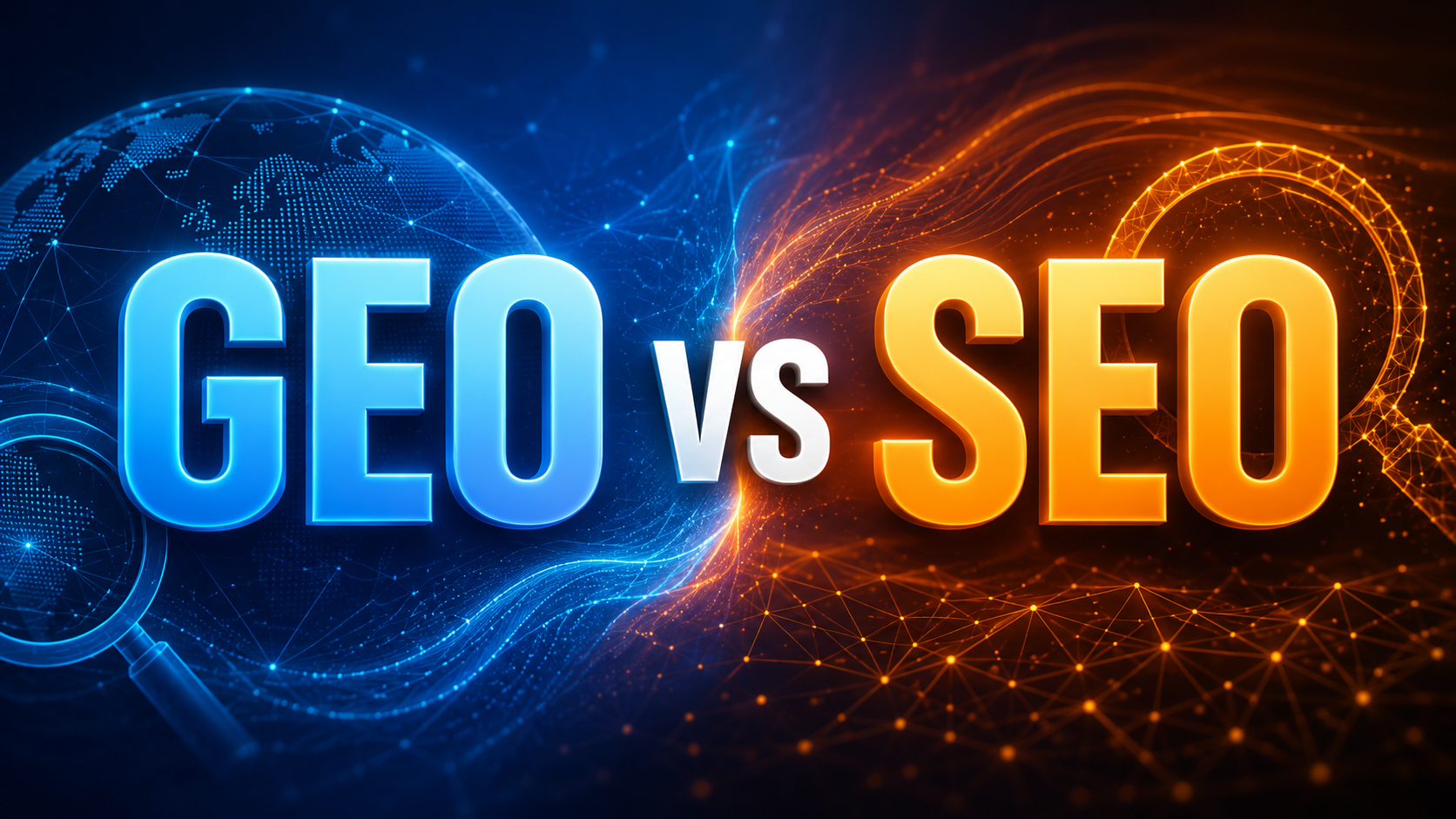
GEO vs SEO is not an either-or decision in 2026. SEO remains the foundation for helping search engines crawl, understand, index, and rank content while Generative Engine Optimization (GEO) focuses on making that content easier for AI-powered search systems to understand retrieve and reference. Businesses that want visibility should combine both strategies instead of replacing one with the other.
What Is the Difference Between GEO and SEO?
SEO, or Search Engine Optimization, improves visibility in traditional search results through technical optimization, useful content, internal linking, authority and search-intent alignment. GEO, or Generative Engine Optimization, extends that work toward AI-generated answers where visibility may depend on whether an AI system can identify clear trustworthy information from a page. The main difference is the desired outcome. SEO aims to earn rankings and organic clicks. GEO aims to increase the chance that a brand, page, or idea appears inside AI-generated responses or supporting citations.
Does GEO Replace SEO?
No. GEO works best when strong SEO already exists. A page still needs to be crawlable, useful, technically sound and easy to understand before it can become a reliable source for AI systems. This makes SEO the foundation and GEO an additional visibility layer. Businesses should first improve technical SEO, content quality, topical relevance and internal linking, then refine important pages with direct answers, definitions comparisons and verifiable facts.
Readers looking for apps and digital tools can explore the Apps Hunt website for more discovery-focused resources.
How to Improve Visibility in Search and AI Answers
Start by answering the main question quickly. Avoid long introductions that hide the useful information. Use descriptive headings, short paragraphs, clear entities, examples, and trustworthy sources. These improvements help users scan content and make passages easier for search engines and AI systems to interpret. Businesses should also build content across formats. Educational videos from the AI App Space YouTube channel can support users who prefer explanations, while useful visual content on Apps Hunt Pinterest can extend brand discovery beyond traditional search results.
How to Measure GEO and SEO Performance
Another important step is measurement. Traditional SEO performance can be tracked through rankings impressions, clicks and conversions. GEO performance should also consider whether pages or brands are appearing in AI-generated answers, citations, or recommendation-style responses.
Which Strategy Should Businesses Prioritize?
Businesses with weak organic visibility should improve SEO first. Websites that already have a strong SEO foundation can work on GEO and SEO together. A practical order is technical SEO, search-intent coverage original content semantic clarity, direct answers, and AI visibility measurement. This approach avoids chasing temporary AI-search tricks while strengthening the website for both search engines and generative platforms.
Final Takeaway
The GEO vs SEO debate should not be about choosing one strategy. SEO builds discoverability, while GEO prepares useful content for AI-driven discovery. In 2026, businesses that combine strong SEO fundamentals with clear, trustworthy citation-worthy content will be better positioned to earn visibility across traditional search results and emerging AI search experiences.