

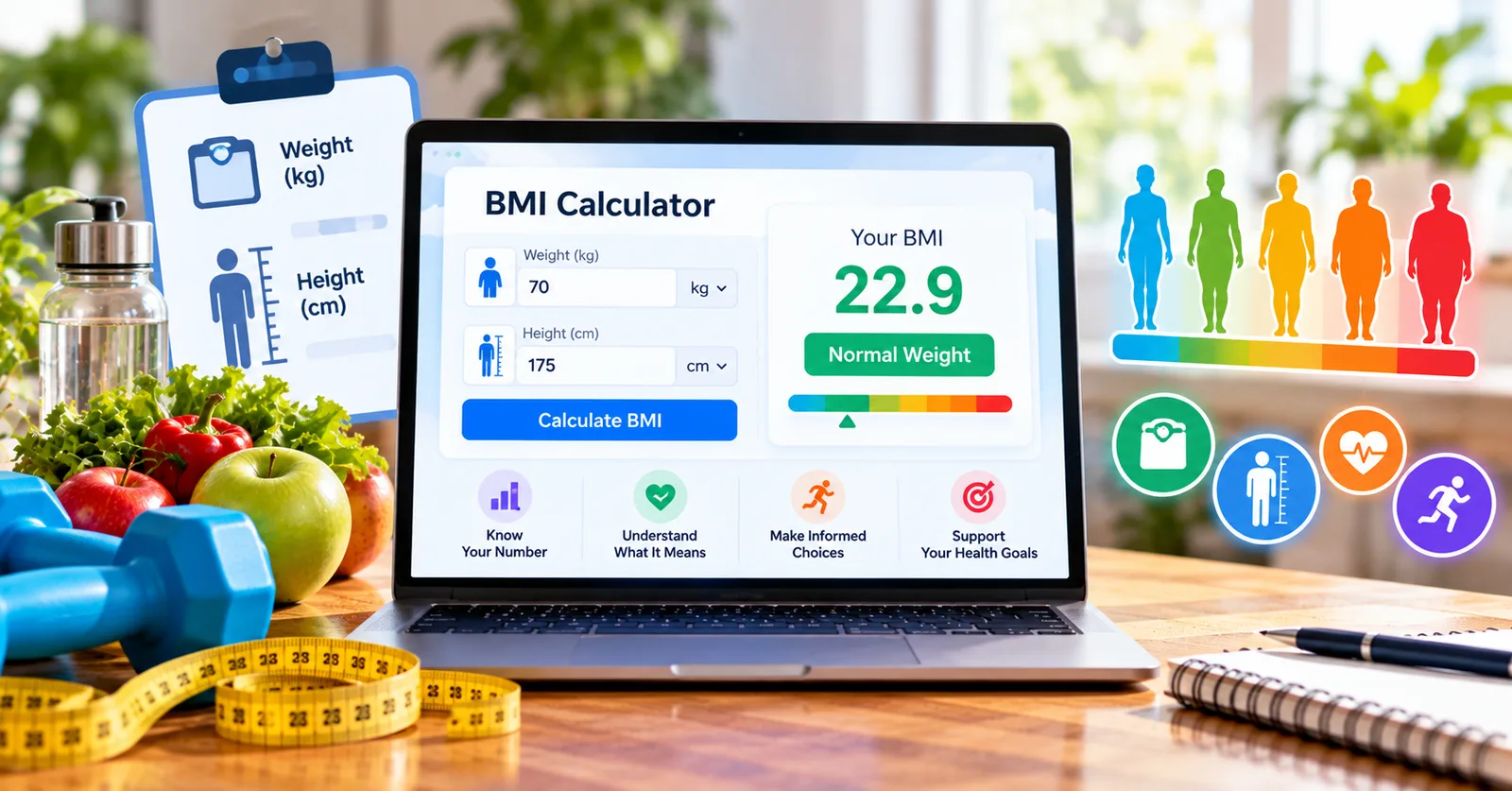
A number on a screen can feel decisive, but body mass index is better understood as a first question than a final answer. Adults often want a quick way to relate their weight to their height, especially when preparing for a routine checkup or tracking a long-term change. The challenge is interpreting the number without confusing a screening measure with a medical diagnosis.
What BMI actually measures
BMI divides weight in kilograms by height in meters squared. A person who weighs 68 kilograms and is 1.70 meters tall has a BMI of about 23.5. Standard adult reference categories commonly use 18.5 to 24.9 as the healthy-weight interval, but the calculation cannot identify muscle mass, body fat distribution, pregnancy-related changes, or an individual medical condition.
Why this matters in everyday life
A calculation becomes useful when it helps someone make a clearer decision. Rather than collecting numbers for their own sake, start by writing down the practical question you want answered. What choice will change if the result is higher or lower than expected? Which assumptions are uncertain? This habit prevents a quick estimate from being mistaken for a complete explanation.
For US readers, unit conventions and local costs can also affect interpretation. Some health information is presented in pounds and inches while scientific formulas use kilograms and meters. Housing expenses differ by county, insurance market and property type. Retail percentages may apply before sales tax, not after it. Checking the units and the baseline is often as important as pressing Calculate.
A practical way to use the result
Measure height accurately, use a recent weight, select the correct units, and record the result alongside the date. Look at trends over months rather than reacting to daily fluctuations. If you are an athlete, pregnant, under 20, or concerned about your health, ask a qualified clinician how the result applies to you.
A step-by-step check before trusting any result
First, confirm that every input describes the same time period and uses the intended units. Second, make one change at a time if you are comparing scenarios; otherwise you cannot tell what caused the result to move. Third, record the date and assumptions if you plan to refer to the calculation later. Finally, ask whether the output is an estimate, a screening reference or a contractual figure. Those categories are not interchangeable.
For example, a mortgage payment estimate can help screen homes but cannot replace a lender disclosure. A BMI result can help frame a discussion but cannot replace clinical assessment. A percentage calculation may be mathematically exact while the underlying data remain incomplete. Treating the arithmetic and the decision separately produces better outcomes.
Try a clear calculation before your next appointment
Use the free Gauge BMI calculator to enter height and weight, review the adult BMI category and see the reference weight range for that height. Its metric and US-unit options remove the need for manual conversion. Try the free Gauge calculators here. The page brings the relevant inputs and results together so you can test a scenario immediately.
Common mistakes to avoid
One common mistake is rounding inputs too early. Another is copying a result without the assumptions that produced it. People also compare numbers with different starting points, overlook additional costs, or treat general reference ranges as personalized recommendations. A reliable workflow is to calculate, sense-check, compare and then decide whether more information is needed.
If a result surprises you, revisit the original entries before drawing conclusions. Recalculate with realistic alternative inputs and explain the limitations to anyone who will use the figure. That small pause can prevent an avoidable mistake in a report, household plan or personal decision.
The bottom line
A good calculator does not make decisions for you. It makes the numbers easier to understand, helps expose assumptions and gives you a starting point for the next practical step. Use the result with context, and keep the original question in view.