
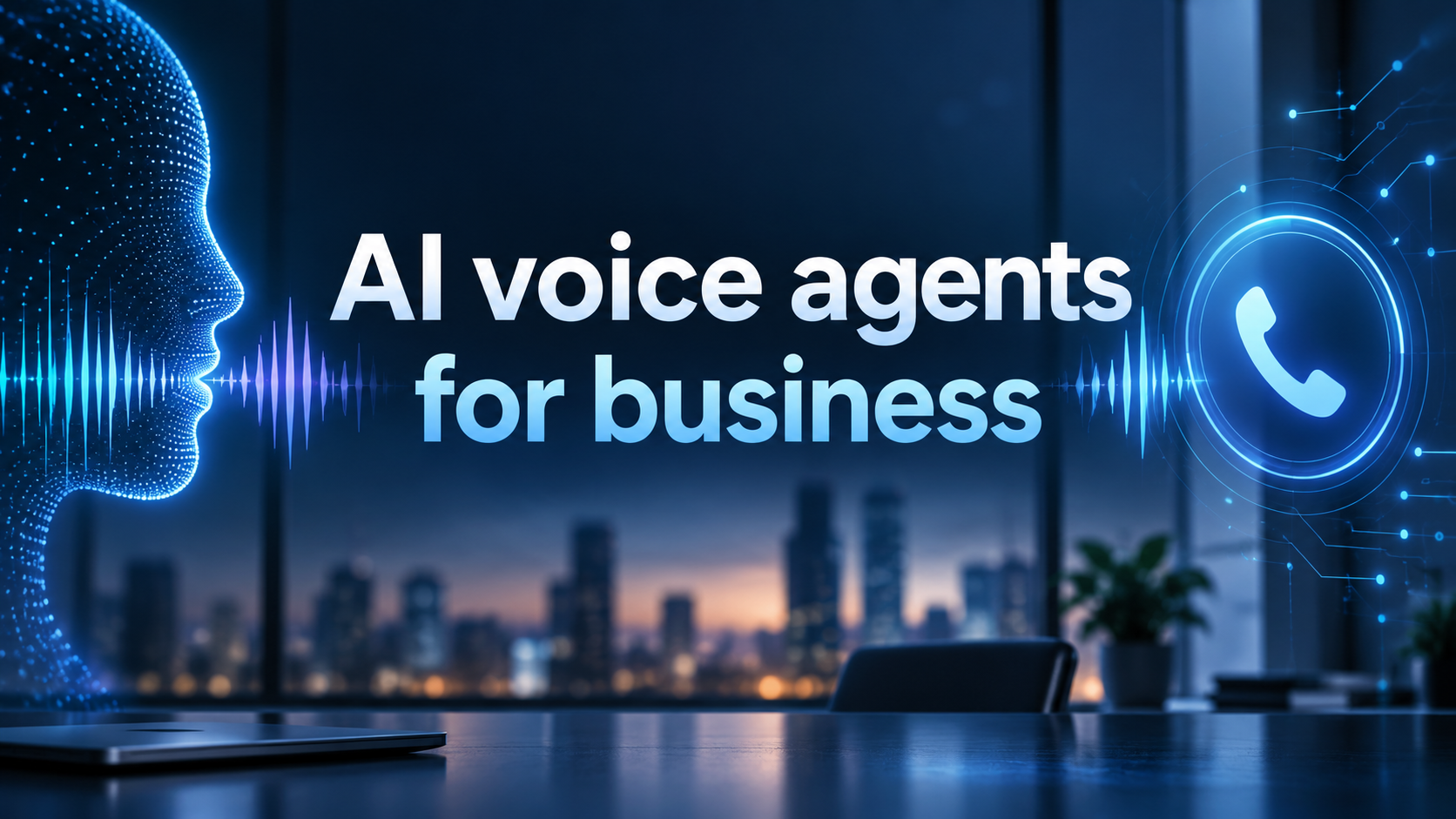
AI voice agents for business can answer inbound calls, qualify leads, schedule appointments, handle routine support and transfer complex conversations to human staff. The best systems connect with CRM, help-desk, calendar and telephony tools so they can take action instead of only speaking. For many businesses, their biggest value comes from faster responses, 24/7 coverage, and less repetitive phone work.
What AI Voice Agents Can Do for Business Calls
Modern voice AI combines speech recognition, language models, text-to-speech technology, and business integrations. An AI customer service voice agent can understand a caller's request, retrieve relevant information, complete approved actions, and record the outcome. Common use cases include:
- Answering FAQs and order-status questions
- Qualifying sales leads before routing them
- Booking, changing, or confirming appointments
- Sending reminders and conducting follow-up calls
- Transferring sensitive or complicated cases to staff
Current voice-AI platforms increasingly support these types of automated and human-assisted call workflows.
Where AI Call Automation Delivers the Most Value
AI call automation works best for repetitive conversations with a predictable next action. Support teams can use it for billing questions account requests, basic troubleshooting, and after-hours coverage. Sales teams can use AI outbound calling for lead qualification, follow-ups, and appointment scheduling. The strongest setup does not try to automate every conversation. It gives the AI a defined scope, controlled access to business data and a reliable path for human escalation.
How to Choose an AI Voice Agent for Business
Evaluate more than voice quality. Natural speech matters, but business usefulness also depends on response latency, integrations, call routing, analytics, security controls and how well the agent handles interruptions or unexpected requests. For customer support, prioritize CRM and help-desk connections. For sales consider lead qualification, scheduling, call outcomes, and outbound workflow controls. Businesses handling sensitive information should also review call recording, consent data storage, access permissions, and retention policies before deployment.
A Practical AI Voice Agent Rollout Strategy
Start with one narrow workflow, such as appointment booking or order-status requests. Define success metrics, test unusual caller situations, review failed conversations, and expand only when performance becomes reliable. This approach reduces customer frustration and makes the business impact easier to measure.
Implement AI Voice Automation in Your Business
Want AI voice automation built around your own business calls? We can help create a setup that handles repetitive conversations, captures more leads, saves staff time, and keeps human agents focused on higher-value customer interactions. Complete our short inquiry form to explore an AI voice solution matched to your workflow.
Follow AI App Space for Practical AI Updates
Follow AI App Space on TikTok, AI App Space on YouTube, and AI App Space on Instagram for practical AI tools, automation ideas, customer-support workflows, and business growth strategies.
Final Takeaway
AI voice agents for business provide the most value when they solve a specific call problem, connect with real business systems, and escalate conversations appropriately. Start with one repeatable workflow measure the results, and expand automation based on customer experience rather than trying to replace every phone interaction.