
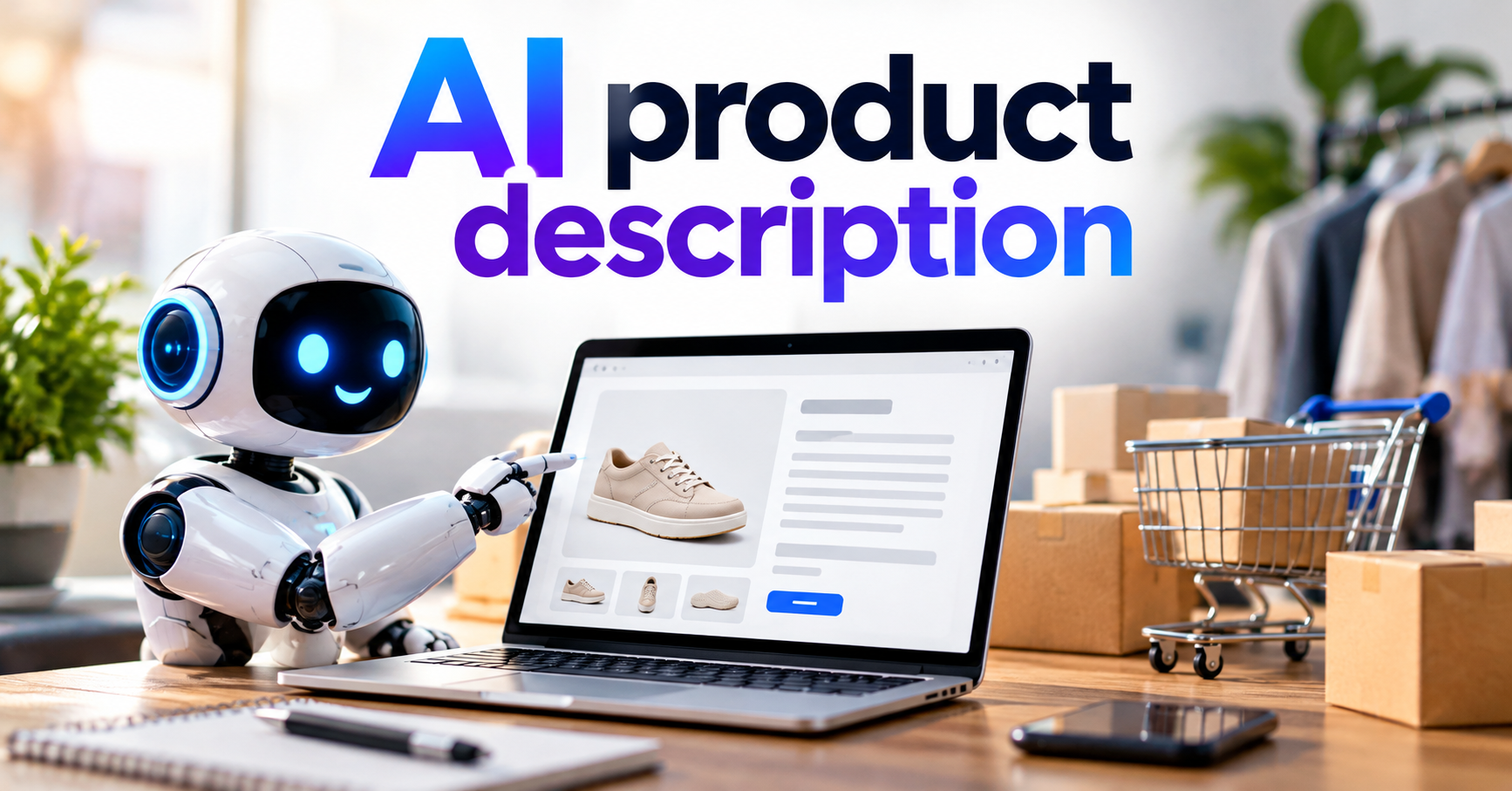
Writing descriptions for a handful of products is manageable. Writing them for 500 variations while answering customers, managing stock, and launching promotions is another story. An AI product description workflow can reduce repetitive drafting, but the real opportunity is better: give shoppers clear, trustworthy reasons to choose the right product. Here's how small e-commerce teams can use that advantage without publishing generic or inaccurate copy.
What Is AI Product Description and How Does It Work?
An AI product description tool turns structured details—product type, material, dimensions, audience, and intended use—into readable sales copy. You provide facts and instructions; the tool suggests wording. It cannot reliably verify a garment's fabric composition or a device's battery life on its own. For a useful draft, supply a product data sheet, your brand's tone, the customer's main concern, and a preferred length. Explore examples of available tools in AI App Space's product description generator guide.
How AI Saves Time When Writing 500 Product Descriptions
Imagine a small clothing store adding 500 items. If manually researching and writing each listing takes eight minutes, the initial work totals 4,000 minutes, or about 67 hours. This is an illustrative assumption, not a measured industry average. Now imagine AI produces drafts from a clean spreadsheet, while a team member spends three minutes per item checking facts, correcting tone, and publishing. That review totals 1,500 minutes, or 25 hours, excluding setup and generation time. The potential saving is meaningful, but only if the product data is accurate and bulk workflows operate reliably. Start with 20 items rather than all 500. Track actual minutes spent per listing, the number of corrections and whether the descriptions answer common buyer questions. Then decide whether scaling is worthwhile.
Turn Basic Features Into Benefits Customers Understand
Consider this original product record: “Cotton T-shirt, black color, regular fit.” It identifies the item but gives shoppers little help deciding whether it suits them. A stronger, fact-safe draft might say: “Looking for an everyday black tee? This cotton T-shirt has a regular fit and a simple look that pairs easily with jeans or shorts.” It connects verified features to a use case without promising softness, durability, or breathability that the seller has not confirmed. Follow Shopify's product description guidance: explain the product's purpose, specifications and supported benefits. When possible, add measurements, care instructions and genuine differentiators. Good copy reduces uncertainty; exaggerated claims create it.
Create SEO-Friendly AI Product Descriptions
Search engines and customers both need specificity. Instead of using the same paragraph for every black shirt, distinguish sleeve length, fit, fabric composition, neckline, and available sizes where those details differ. Use a relevant search phrase naturally in the product title or description, then focus on questions a buyer would actually ask. Avoid repeating keywords just to increase their frequency. Internal category links, accurate titles, helpful images, and complete product details support a coherent shopping experience. Google's guidance on generative AI content stresses accuracy, quality, relevance, and manual review. Publishing hundreds of low-value pages with AI can violate its spam policies; AI-generated text is not an SEO shortcut.
Why Human Editing and Brand Voice Still Matter
Two stores selling similar shirts should not sound identical. A minimalist brand might write one crisp sentence; a playful brand might use a warmer, more casual voice. Give your AI tool two approved examples, then revise drafts to match. Before publishing AI product descriptions, check each item's specifications against its source record. Remove unsupported superlatives, invented guarantees, misleading delivery promises, and repeated wording. Confirm that size guides and return information remain clear. Treat review time as part of the budget, not an optional extra. A fast draft that creates customer confusion may cost more than it saves.
Can AI Product Descriptions Increase Sales? Test the Impact
Clearer descriptions may help shoppers decide, but higher conversion rates are not guaranteed. Compare a reviewed original description against a reviewed AI-assisted version on comparable product pages, or run a controlled A/B test if your store supports it. Keep prices, images, traffic sources and promotions consistent where possible. Measure add-to-cart rate and completed purchases, not just clicks. Record the test period and sample sizes; small differences on low-traffic pages can be random.
Final Thoughts
The strongest approach combines AI drafting speed with reliable product data, human judgment, and measured testing. For more tools, follow AI App Space on Instagram, or contact AI App Space to discuss your e-commerce workflow.