
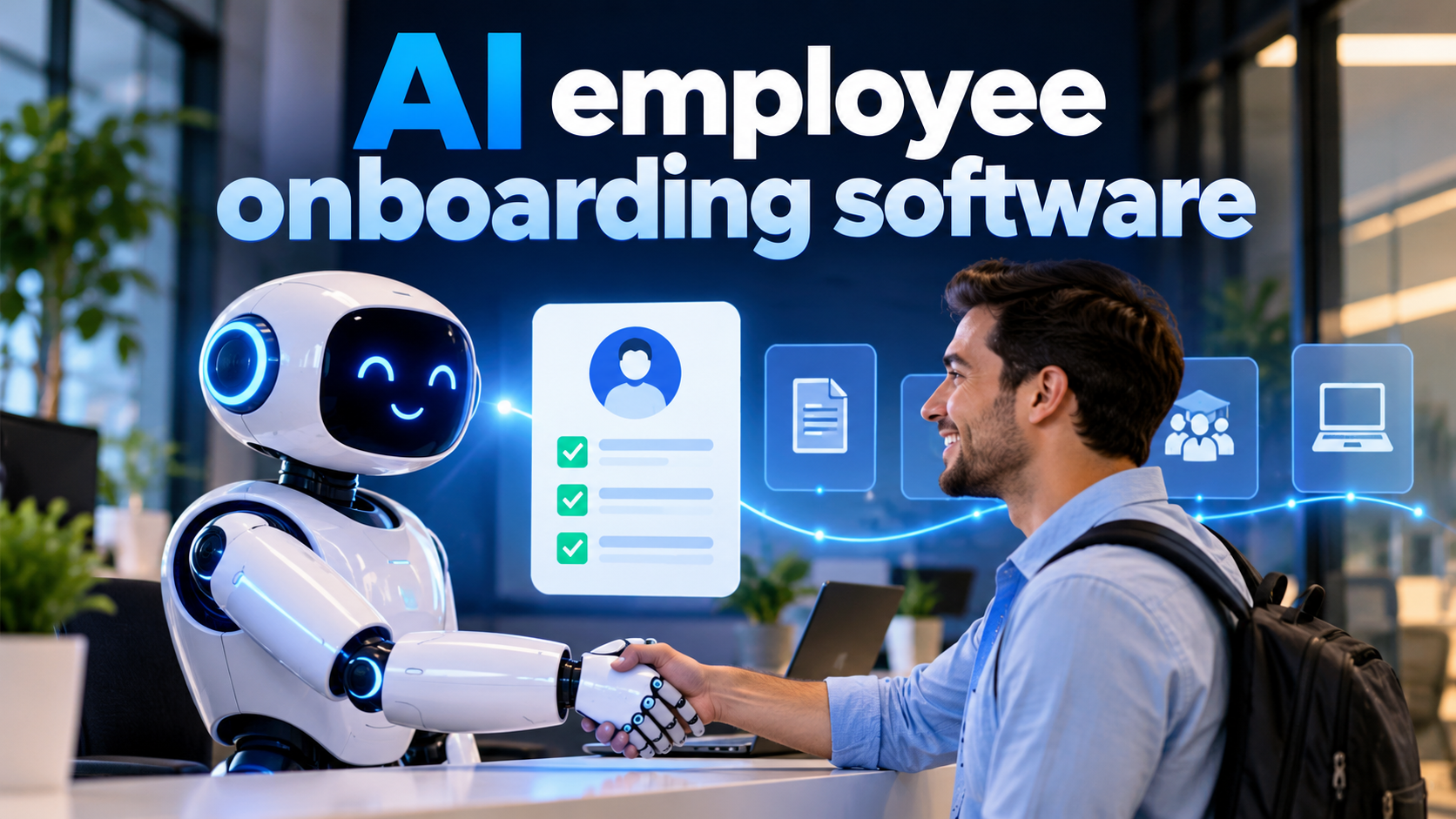
AI employee onboarding software helps growing companies automate repetitive new-hire tasks while giving employees a more structured introduction to their workplace. Modern systems can coordinate documents, training, reminders, account setup, HR workflows and routine questions. For entrepreneurs and automation providers, this shift is also creating an opportunity to build specialized onboarding products and implementation services for businesses that have outgrown manual processes.
Why AI Employee Onboarding Software Is Gaining Attention
Employee onboarding often crosses several departments. HR collects information, IT prepares access, managers assign initial work, and employees need policies, training, and answers to common questions. Automation can connect these steps. IBM describes onboarding automation as using technologies including AI and robotic process automation to handle manual HR activities associated with integrating employees into an organization. More recent AI onboarding solutions are extending this model with personalized content and AI-assisted employee support. For example, a growing company could trigger an onboarding workflow when a new employee enters its HR system. The workflow could send welcome information, notify IT assign role-specific training schedule reminders, and provide an AI assistant for common policy questions.
How AI Employee Onboarding Automation Can Work
A practical system does not need to replace HR. Instead, it can automate predictable administrative work while keeping people responsible for decisions that require judgment.
A useful workflow may include:
- role-specific onboarding checklists;
- automated document and task reminders;
- HRIS, IT, and communication integrations;
- AI-powered answers based on approved company knowledge; and
- progress tracking for HR and managers.
Current platforms already demonstrate parts of this model. Zapier, for example, describes workflows that can trigger onboarding checklists, circulate documents, provision accounts, and coordinate HR and IT systems.
The Business Opportunity Behind AI Onboarding
This creates room for specialized SaaS companies, consultants, and automation agencies. A provider could initially target companies with 20–200 employees and offer an onboarding system connected to their existing software. Revenue could come from monthly subscriptions, implementation fees, per-employee pricing, or managed automation services. The strongest niche may be industry-specific onboarding. Healthcare companies, agencies, software teams, retailers, and remote businesses have different documentation, training, access, and compliance requirements. Specialization can therefore create a clearer value proposition than a generic onboarding assistant. Entrepreneurs researching automation businesses can also explore more technology opportunities on Apps Hunt and its guide to Android storage analysis.
Building a Minimum Viable AI Employee Onboarding System
Start with one costly workflow rather than trying to automate the entire employee lifecycle.
An MVP could combine an employee information form, role-based checklist generator, automated reminders, company-knowledge assistant and HR dashboard. Human approval should remain in workflows involving sensitive employee information, compliance, access permissions, or important employment decisions. AI can also help founders develop reusable prompts for onboarding content and workflow design. A dedicated Prompt Creator app can support prompt-building workflows where appropriate. The first validation test is straightforward: work with several growing businesses, document which onboarding tasks consume the most HR time, automate one repeated process, and measure whether the workflow reduces manual steps without harming employee experience.
Want AI Onboarding Built for Your Business?
Want to reduce repetitive HR work and create a more consistent new-hire experience? An AI onboarding workflow can connect routine tasks, internal knowledge, reminders, and employee support around your existing business systems. Complete our short inquiry form to explore an onboarding automation solution designed around your company’s workflow.
Follow AI App Space for More AI Opportunities
Follow AI App Space on Facebook, TikTok, and Instagram for practical AI tools, automation ideas, business opportunities, and growth strategies.
Final Takeaway
AI employee onboarding software is most useful when it removes repetitive coordination rather than human involvement. For entrepreneurs, a promising approach is to build focused onboarding automation for a specific industry or company size and integrate it with tools customers already use instead of trying to replace their complete HR stack.