
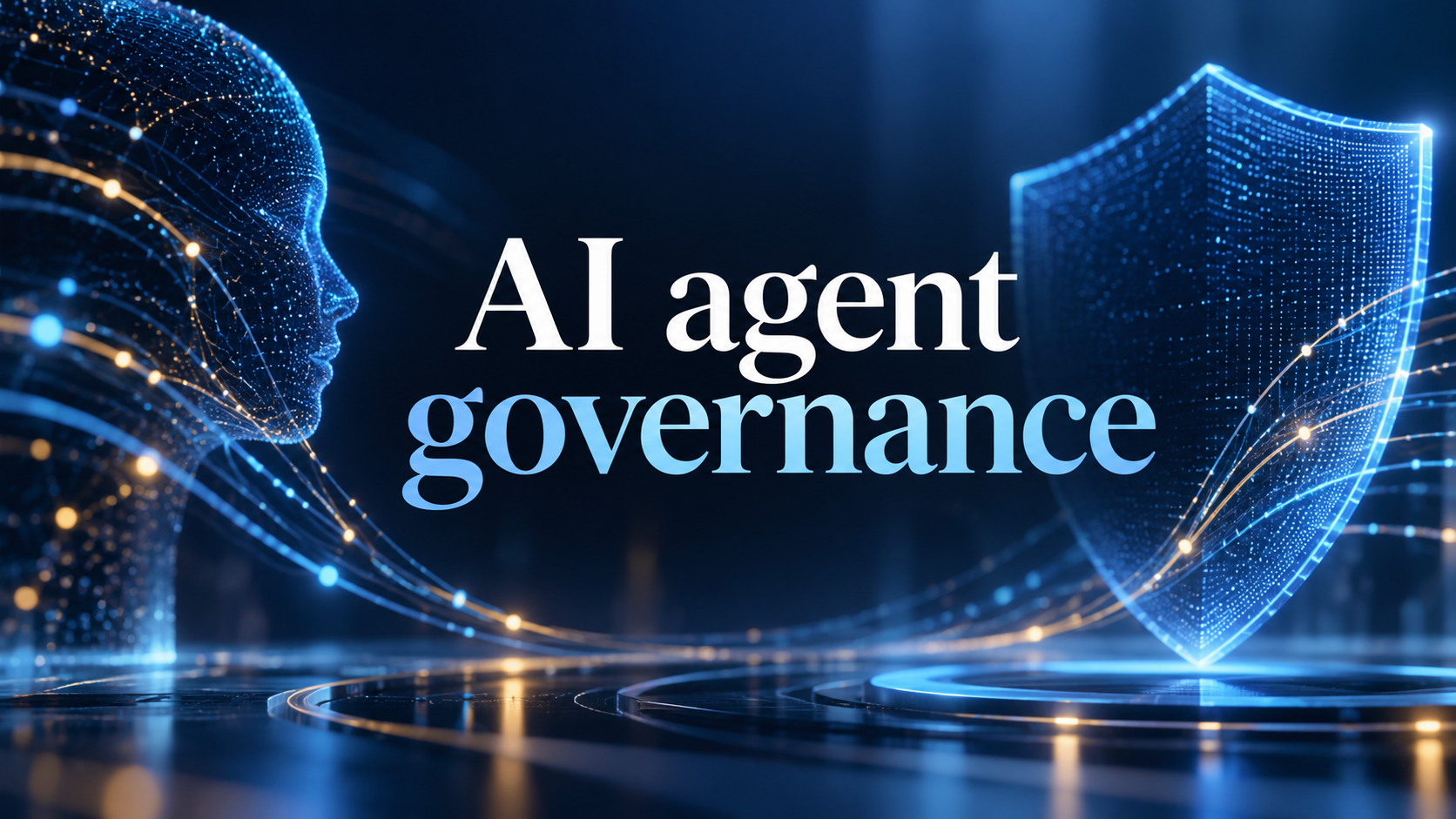
AI agent governance is becoming a business opportunity because autonomous agents can access data, call tools, trigger workflows and act without a person approving every step. Companies therefore need identity, permissions, monitoring, audit trails, policy enforcement and human approval for sensitive actions. That creates room for new SaaS products and managed services focused on controlling machine actors safely.
Why AI Agent Governance Is Becoming a Market
The risk changes when AI moves from answering questions to taking actions. NIST reported in May 2026 that respondents to its AI-agent security inquiry widely agreed agents introduce novel security threats and that security concerns can become a barrier to adoption. NIST has also highlighted identity and authorization as important foundations for agentic systems. The commercial signal is strengthening. On September 24, 2026, Island announced a $400 million Series F at a $6.4 billion valuation and positioned its platform as a control layer for employees and AI agents. One funding round does not define the whole market, but it shows that agent control is becoming a serious enterprise infrastructure category.
What Should an AI Agent Governance Product Control?
OWASP's September 2026 Agent Control Standard focuses on making agents inspectable, traceable, and controllable at runtime. A practical platform could register each agent, define which apps and data it may access, log actions, require approval for high-risk steps, and alert teams when behavior violates policy. OpenAI's current agent guidance similarly supports guardrails and human review for sensitive tool actions. The practical lesson is simple governance needs to sit close to the point where an agent can create a real-world side effect. Explore more artificial intelligence tools, solutions, and trends on Apps Hunt to discover useful technologies for businesses and professionals.
The Hidden AI Agent Governance Business Opportunity
The next AI security layer may be less about filtering what an AI says and more about controlling what it is allowed to do. That creates an opening for identity, access control, monitoring, approval, and audit software designed specifically for autonomous agents. A strong first niche is AI automation agencies managing agents for multiple clients. Adjacent customers include finance, healthcare, legal, e-commerce, and SaaS teams where agents interact with sensitive systems.
Businesses still deciding where agents can create value can read the AI App Space guide to AI agents for small business.
Monetization and MVP Strategy
A practical model is subscription SaaS plus implementation services. Illustrative pricing could start around $99–$499 per month for smaller teams, with custom plans for compliance features, longer audit-log retention, and advanced integrations. These figures should be treated as pricing hypotheses to validate with real customers. Start with one agent framework and a few common business integrations. Deliver early deployments partly as a managed service, identify which controls customers repeatedly request then automate those workflows into software.
Build Safer AI Agents for Your Business
Want AI agents implemented with better permissions, approvals, monitoring, and workflow controls? Complete our short inquiry form to explore an AI setup designed to automate work, save time and reduce operational risk.
Want More AI & Business Opportunities?
Follow AI App Space for practical AI tools, automation strategies, startup opportunities, and business-growth ideas:
Final Takeaway
The strongest AI agent governance opportunity is a focused control layer that gives autonomous agents identities, explicit permissions, observable actions, enforceable limits and a human escalation path as companies move agents from experiments into production.